Call Now for Trusted Plumbing Service
Introduction to the Comparison
Choosing between a tankless and traditional water heater affects more than just your installation day. The decision influences your monthly utility bills, available floor space, hot water availability during peak demand, and replacement timeline over the next two decades. For homeowners in Clayton, GA, this choice carries additional weight given the region’s seasonal temperature swings and the strain cold winters place on heating systems.
When your current water heater fails or shows signs of aging, the urgency to replace it can push you toward the first available option. However, taking time to understand the financial trade-offs between upfront costs and long-term savings helps you make a decision aligned with your household needs and budget constraints. A tankless system might cost two to three times more initially but can deliver significant energy savings over its lifespan, while a traditional tank model offers lower entry costs with predictable performance for larger families.
This guide breaks down the actual numbers behind water heater replacement costs, comparing installation expenses, operating efficiency, maintenance requirements, and total ownership costs over a decade. You will learn how each system functions, what drives price differences in the North Georgia market, and which factors matter most when sizing a unit for your home. By the end, you will have a clear framework for evaluating which system delivers better value for your specific situation, whether you prioritize immediate affordability or long-term energy efficiency.
Understanding Tankless Water Heater Systems
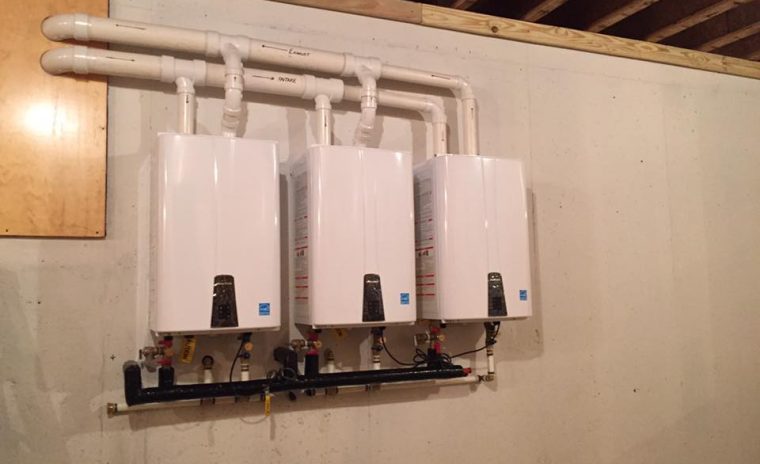
Tankless water heaters eliminate the storage tank entirely, heating water on demand as it flows through the unit. When you turn on a hot water tap, cold water travels through a pipe into the heating element, where either a gas burner or electric coils rapidly raise the temperature. This design means you never run out of hot water during a shower, though flow rate limitations can affect simultaneous use in multiple bathrooms.
Installation costs for tankless water heater services typically range from $2,000 to $5,000 in the Clayton area, with gas models generally sitting at the higher end due to venting requirements and potential gas line upgrades. Electric tankless units cost less to install but may require electrical panel upgrades to handle the amperage draw, which can add $500 to $1,500 to your project. The compact wall-mounted design saves 16 to 20 square feet of floor space compared to traditional tanks, a valuable consideration in smaller utility rooms or crawl spaces common in North Georgia homes.
Energy efficiency represents the primary advantage of going tankless. These units achieve 80 to 98 percent thermal efficiency because they eliminate standby heat loss, the energy wasted keeping 40 to 50 gallons of water hot around the clock. For a household using 41 gallons or less of hot water daily, tankless systems can reduce water heating costs by 24 to 34 percent annually. However, during North Georgia’s cold winter months when incoming groundwater temperatures drop to 45 to 50 degrees, tankless units work harder to achieve target temperatures, which can reduce efficiency gains and require proper sizing by a licensed plumber familiar with regional demand patterns.
Lifespan also tilts in favor of tankless systems, with quality units lasting 15 to 20 years or more when maintained properly. Annual maintenance involves flushing mineral deposits, particularly important in areas with hard water, and checking burner operation or heating elements. This longevity, combined with lower operating costs, means tankless water heater repair and replacement schedules extend well beyond traditional tank models.
Traditional Tank Water Heaters
Conventional tank water heaters store 30 to 80 gallons of heated water in an insulated cylinder, maintaining temperature through a thermostat-controlled burner or heating element. When hot water exits through the top of the tank for use, cold water enters at the bottom to refill the reservoir. This tried-and-tested design has served American homes reliably for decades and remains the dominant choice in many Clayton, GA residences due to lower upfront costs and straightforward plumbing installation services.
Installation expenses for traditional systems range from $800 to $2,000, including the unit, labor, permits, and basic venting or flue work. Gas models typically cost $900 to $2,000 installed, while electric units fall between $800 and $1,500. This price advantage makes tank heaters attractive for homeowners facing unexpected failures who need immediate replacement within a constrained budget. The installation process also proceeds faster, often completed in three to five hours by a qualified professional, compared to the full-day commitment tankless systems sometimes require.
The primary drawback lies in standby energy loss. Because the tank continuously heats water even when no one uses it, these units consume energy around the clock. In North Georgia, where winter temperatures regularly dip into the 20s and 30s, uninsulated garages and crawl spaces force water heaters to work harder to maintain set temperatures, increasing utility costs. A conventional 50-gallon electric water heater typically costs $400 to $600 annually to operate, while gas models run $250 to $400 per year depending on local rates and usage patterns.
Tank water heaters last 10 to 15 years on average, with proper maintenance extending lifespan toward the upper end of that range. Annual tasks include draining sediment buildup, testing the pressure relief valve, and inspecting the anode rod, a sacrificial component that prevents tank corrosion. Many homeowners in the region skip these maintenance steps, which accelerates tank deterioration and can lead to catastrophic leaks that damage flooring and belongings. When replacement time arrives, the cycle repeats, and homeowners face the same cost-versus-efficiency decision once again.
Comparing Total Cost of Ownership
Evaluating water heater options solely on purchase price ignores the larger financial picture. Total cost of ownership accounts for installation, energy consumption, maintenance, repairs, and eventual replacement over a 10-year period. This perspective reveals how tankless systems can offset higher upfront expenses through reduced operating costs, while traditional tanks maintain their affordability advantage only in the short term.
Consider a typical North Georgia household using 50 gallons of hot water daily. Installing a gas tankless unit costs approximately $4,000, while a comparable 50-gallon gas tank heater runs $1,500 installed. Over 10 years, the tankless system consumes roughly $300 annually in gas, totaling $3,000, whereas the traditional tank costs $400 per year, adding $4,000 to the total. Maintenance for the tankless unit averages $150 annually for descaling and inspection, or $1,500 over a decade. Traditional tank maintenance costs about $100 yearly when performed, totaling $1,000, though many homeowners skip this step entirely.
Adding these figures together, the tankless system costs approximately $8,500 over 10 years ($4,000 installation plus $3,000 energy plus $1,500 maintenance). The traditional tank totals around $7,500 ($1,500 installation plus $4,000 energy plus $1,000 maintenance plus $1,000 for a replacement unit at year 11, prorated). This simplified example shows the gap narrowing significantly, and any increase in energy rates or higher household water usage can tip the balance in favor of tankless systems.
Regional factors matter when running these numbers for your situation. Clayton’s cold winters increase heating demand, while the area’s moderate hardness water accelerates mineral buildup in both system types. Homes relying on well water may require additional water leak detection services and filtration to protect tankless heat exchangers from clogging. Before committing to either option, request detailed estimates from local plumbing services that account for your home’s specific conditions, including existing gas line capacity, electrical service rating, and available installation space.
How to Choose and Next Steps
Selecting the right water heater depends on several household-specific factors. Start by evaluating your daily hot water consumption. Smaller households with one or two people benefit most from tankless systems, which eliminate the standby losses that penalize tank heaters serving minimal demand. Families with four or more members using multiple bathrooms simultaneously may find traditional tanks deliver more consistent performance without the flow-rate limitations inherent in tankless designs, unless you install multiple tankless units or a high-capacity commercial-grade model.
Budget constraints play a decisive role. If you cannot absorb the $2,000 to $5,000 upfront investment for tankless water heater services, a traditional tank keeps you within the $800 to $2,000 range and delivers reliable hot water immediately. However, if you plan to stay in your home for a decade or longer, the energy savings and extended lifespan of a tankless system can justify the higher initial expense. Calculate your break-even point using your current energy rates and historical water usage to determine which option delivers better value over your ownership timeline.
Space availability also influences your decision. Tankless units mount on walls and free up valuable floor space in utility rooms, basements, or garages, an advantage for homes with limited square footage. Traditional tanks require dedicated floor space and clearance for venting, which can constrain layout options in compact utility areas. For new construction plumbing projects or major renovations, planning for tankless installations during the design phase simplifies venting and fuel line routing.
If you remain uncertain which system fits your home, schedule a consultation with a licensed plumber who can assess your water usage patterns, inspect your existing infrastructure, and provide accurate estimates for both options. General plumbing services typically include free or low-cost evaluations that clarify your choices and identify potential installation challenges before you commit. Taking this step ensures you select a system matched to your household demands and avoid costly surprises during installation.